01 · ★
Brain Activities Monitoring using fNIRS
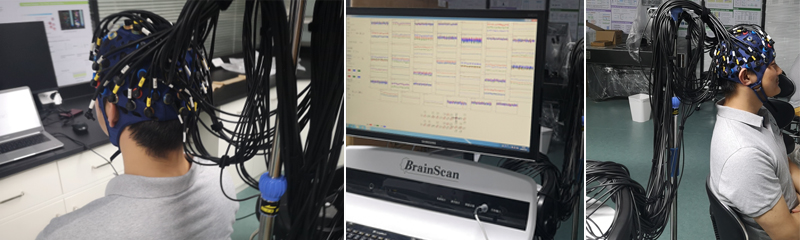
We use emotional images and sounds as inputs and use fNIRS to collect activities across brain regions, connecting brain-computer interfaces with the next generation of robust, brain-inspired AI.
SELECTED WORK
Focused explorations that connect scientific ideas with capable, robust systems.
We use emotional images and sounds as inputs and use fNIRS to collect activities across brain regions, connecting brain-computer interfaces with the next generation of robust, brain-inspired AI.
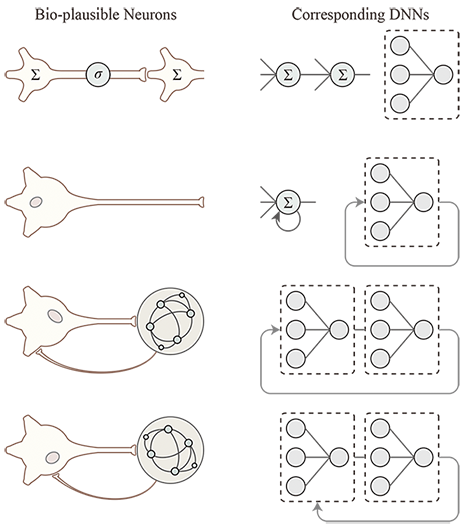
We study architectures between conventional deep networks and spiking neural networks, using recurrence and feedback at several levels to improve robustness and biological plausibility.
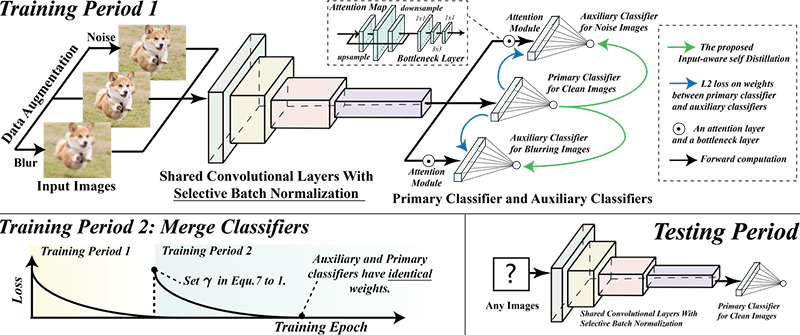
Auxiliary classifiers learn from corrupted samples while the primary classifier learns from clean samples. Input-aware self-distillation and selective batch normalization transfer robust information without compromising accuracy.
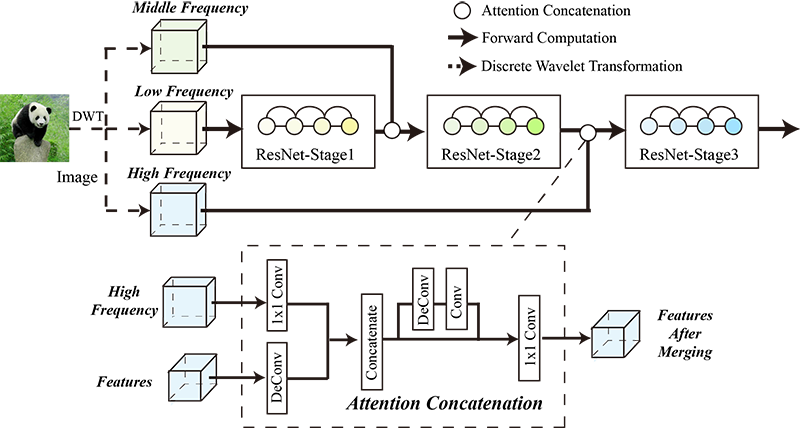
The framework divides a neural network into sections and distills knowledge from deeper portions into shallow classifiers, improving accuracy while keeping deployment efficient.